
Households due to take on more debt in the long term as finances squeezed, Budget indicates
09 March 2017
The final March budget didn’t spring any surprises. While the Chancellor presented a more optimistic picture for short-term growth, predictions from the Office for Budget Responsibility’s (OBR) forecasts indicate that the improvement will likely not last long. The level of GDP will be slightly lower in five years’ time than predicted last November, but on a more positive note, the forecast implies there will be a small improvement in the level of government debt as recent receipts have been stronger than expected.
The ‘B’ word, Brexit, which hangs over these forecasts, received scant mention. Not only will the way Brexit unfolds create huge uncertainty around any current predictions and likely dictate the future of the UK economy for the next few years, but the potential divorce bill – £50bn on some estimates – was not mentioned.
So, what does the OBR make of the prospects for UK households? First, despite the rise in the National Living Wage to £7.50 in April, the exchange rate driven increase in inflation will keep household finances under continued pressure this year, with stagnation of real personal disposable income. Average earnings growth adjusted for inflation – after a period of rising living standards – fell sharply in December offering an indication of what is to come.

Chart 1: Real Earnings Growth
OBR’s earnings growth forecast, which was revised down significantly last November and has been nudged down further as the OBR becomes even more pessimistic about productivity. OBR’s more negative outlook is also true of household incomes. In the new forecast, income grows only modestly and are estimated to be 1.7% lower in 2022 than previously expected, increasing the effective burden of debt on households. The forecasts continue to paint a more gloomy outlook than before due to households recently taking on more debt and expectations this will continue to increase above earlier predictions in the next five years.
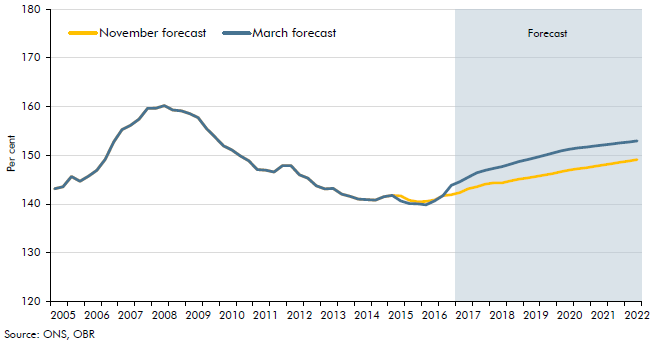
Chart 2: Household gross debt to income
The overall picture is likely sustainable while interest rates remain low. However, debt of 153% of household income is a figure which begins to creep towards the unsustainable level seen in the run up to the last recession in 2008.
Interested in learning more?
Contact usInsights

Is your firm ready for the upcoming changes required for credit reference agency (CRA) reporting?
31 Mar 26 | Banking

Preparing for the Bank of England’s Second System-Wide Exploratory Scenario (SWES): Next steps for private credit firms
23 Mar 26 | Banking


20 weeks until the arrival of Buy Now Pay Later (BNPL) regulation: What firms can expect
26 Feb 26 | Banking
Ruya Bank partners with 4most to deliver IFRS 9 ECL framework and ongoing execution support
24 Feb 26 | Banking
4most named as a supplier on Crown Commercial Service’s Digital Outcomes Specialist 7 RM1043.9 framework
23 Feb 26 | Data